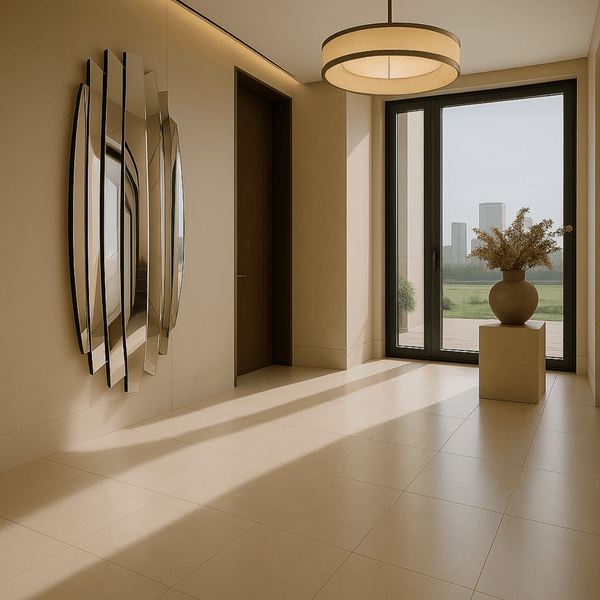
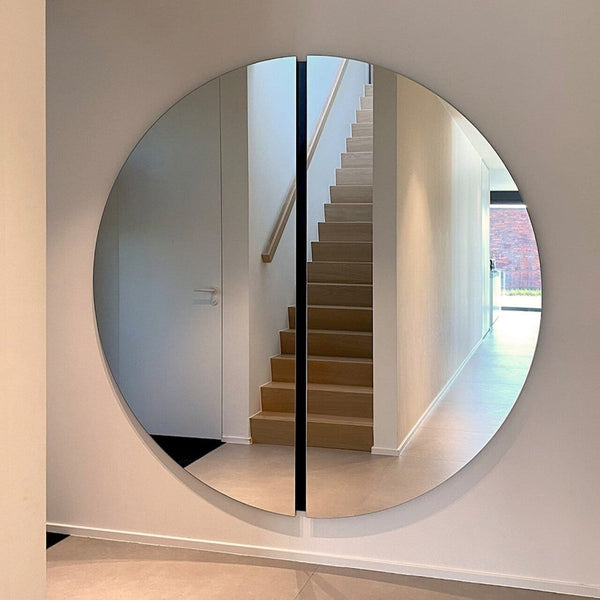
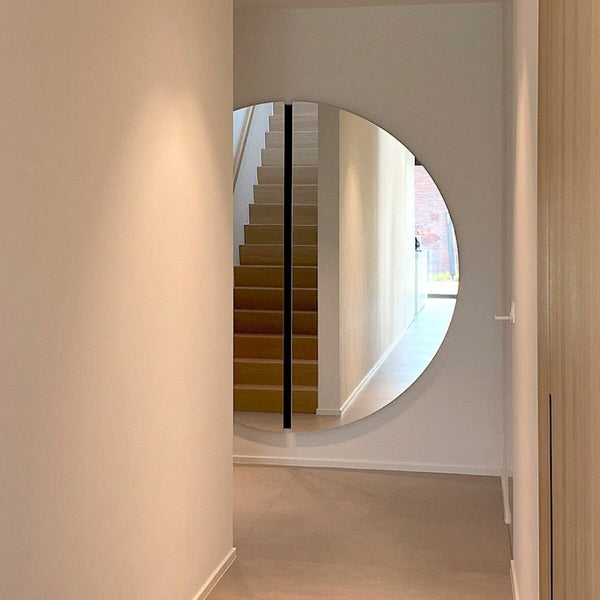
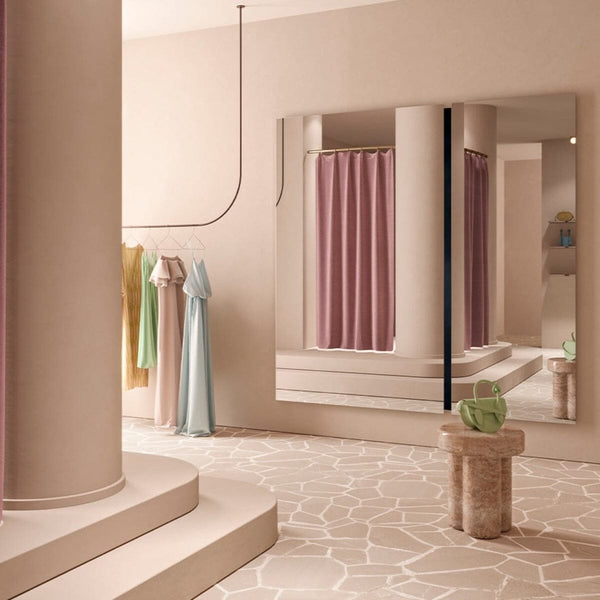
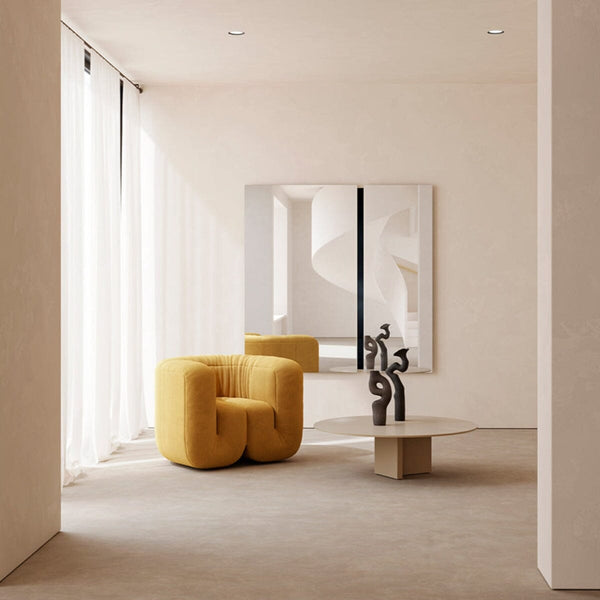
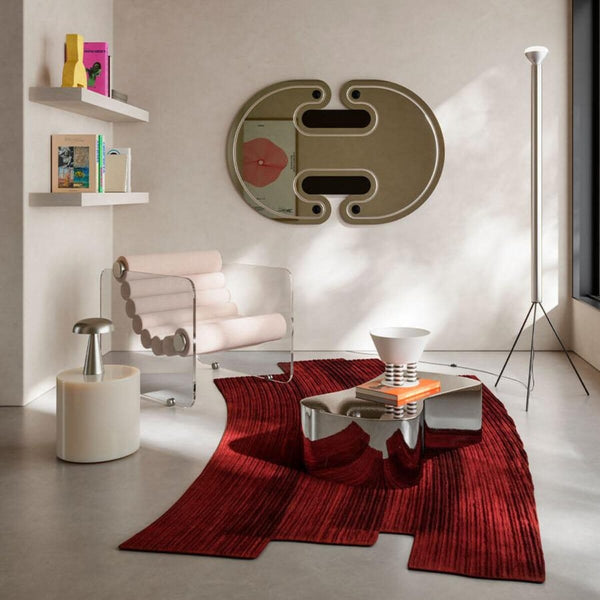
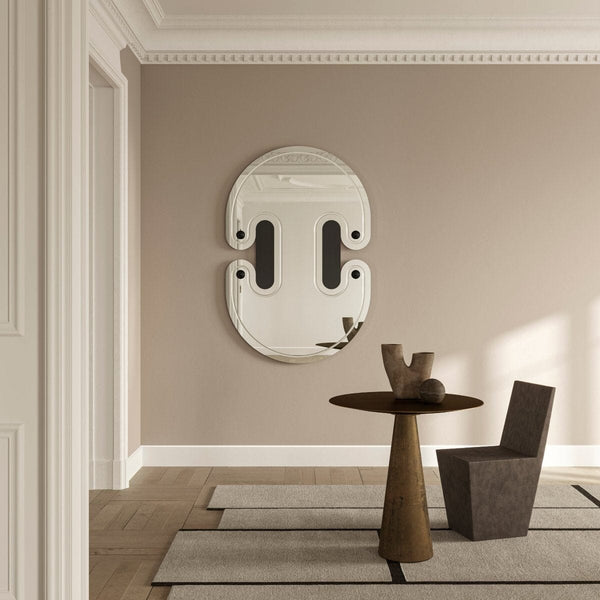
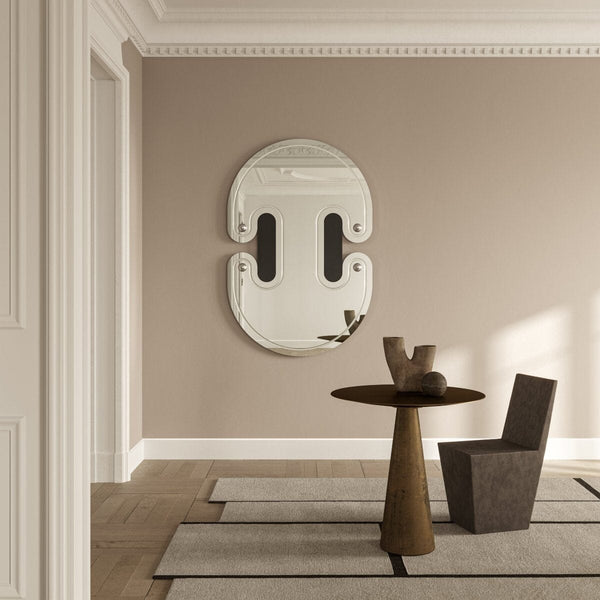
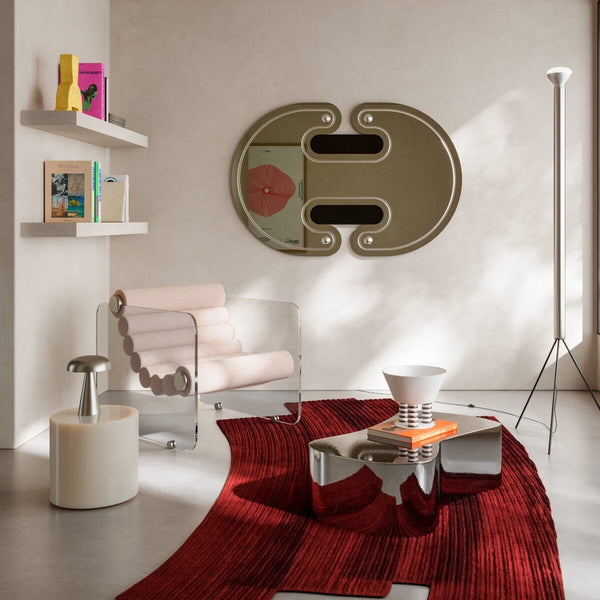
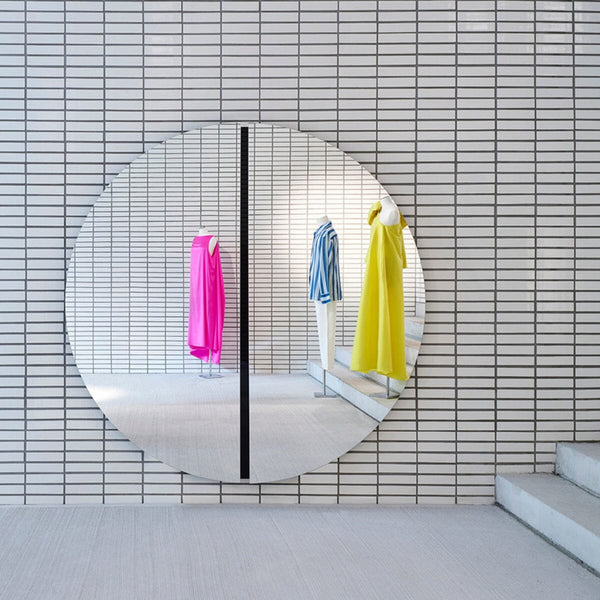
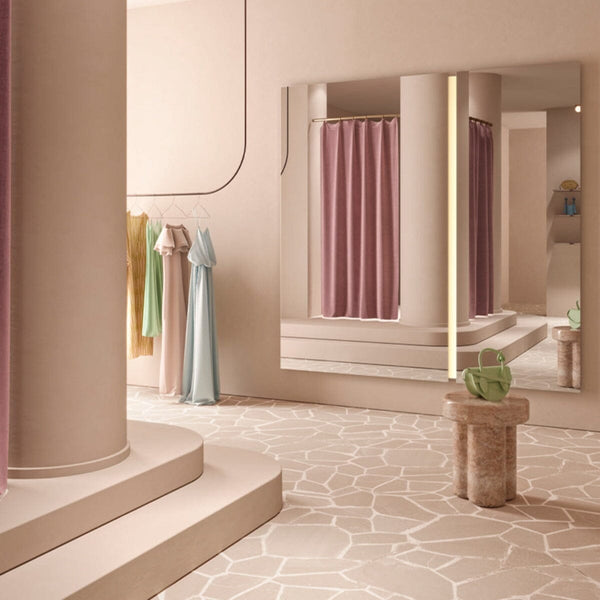
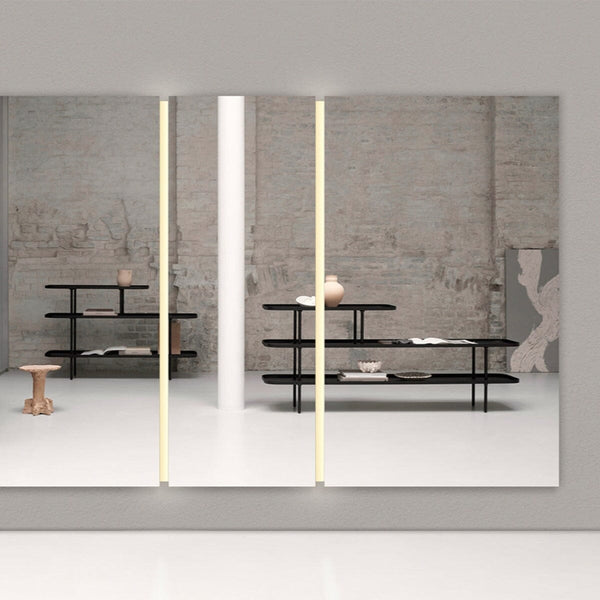
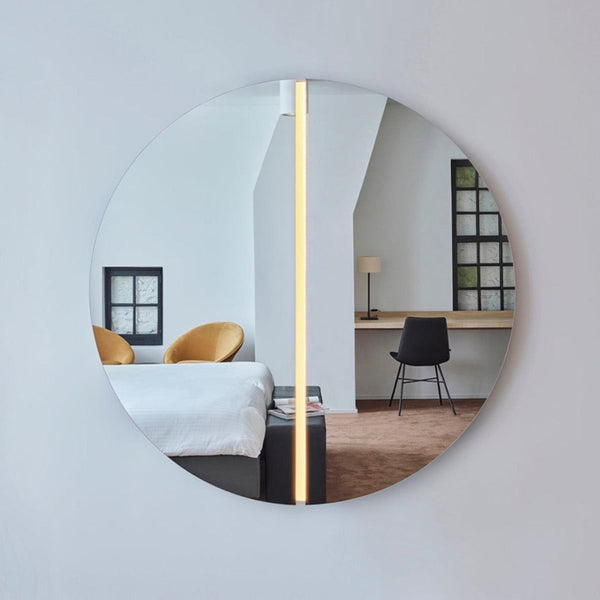
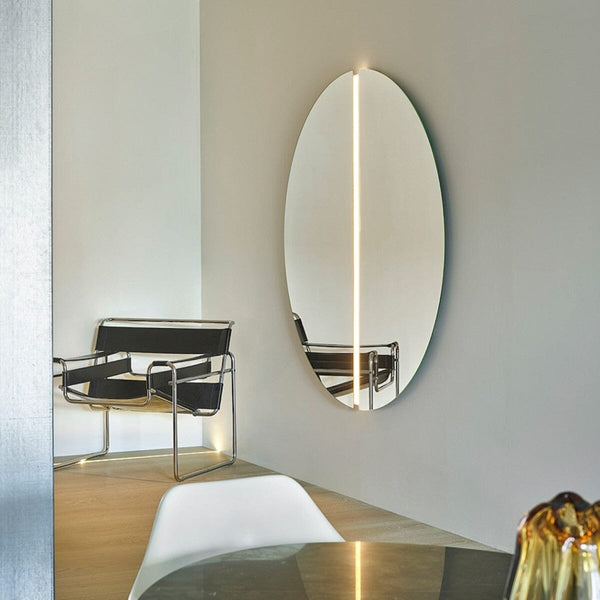
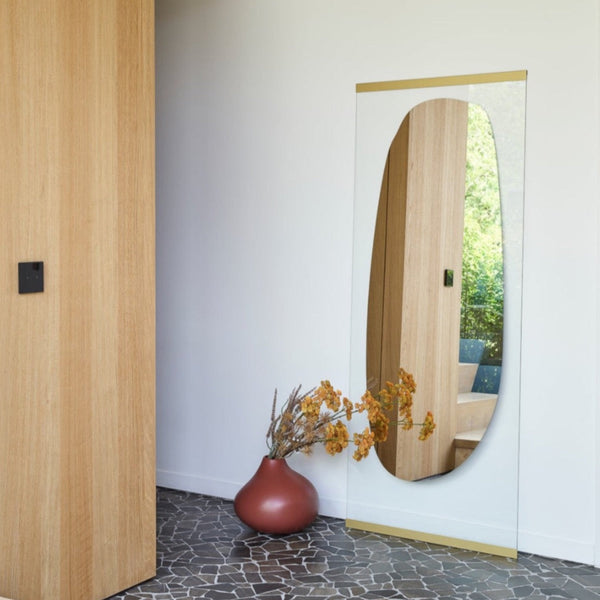
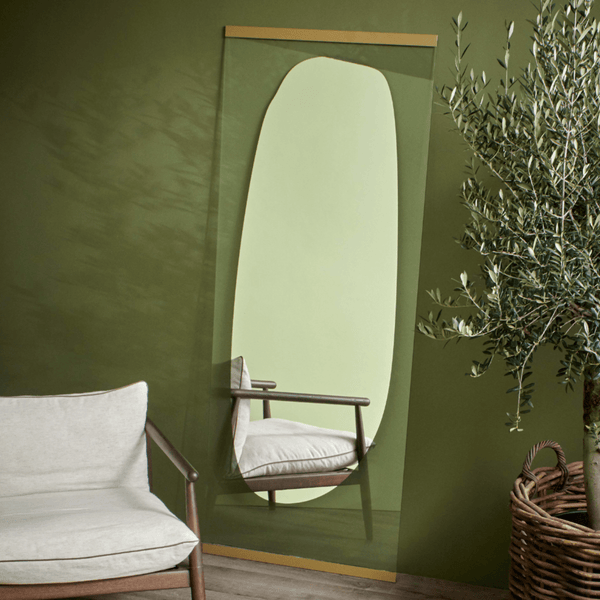
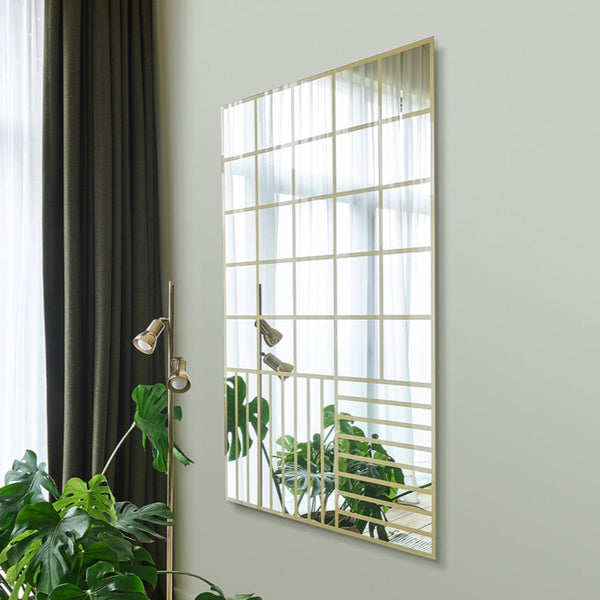
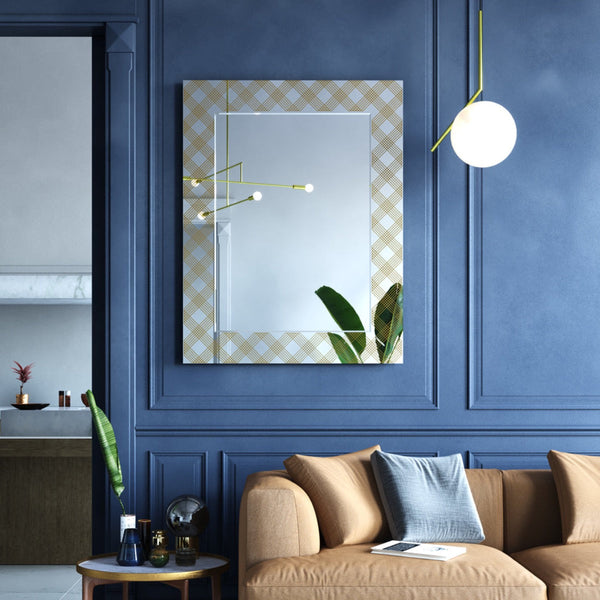
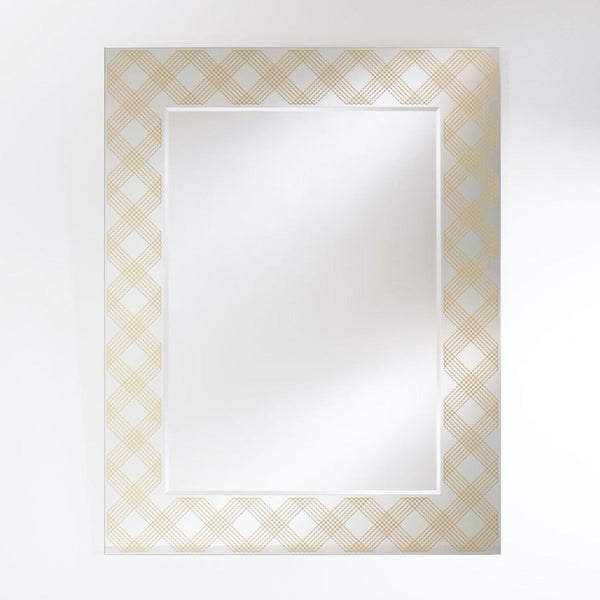
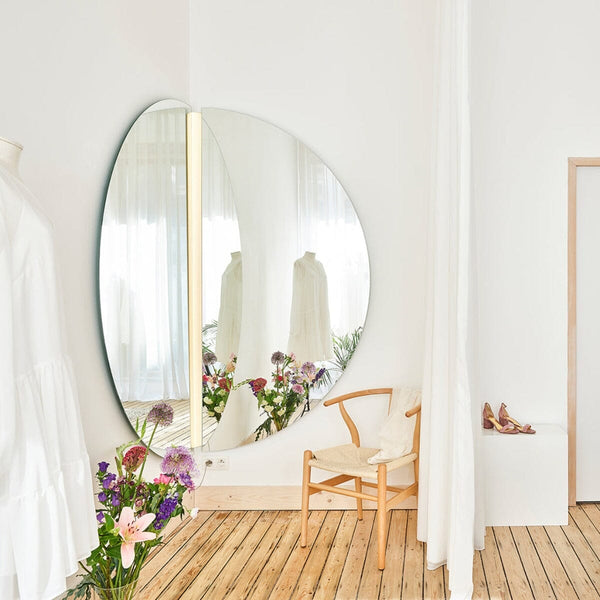
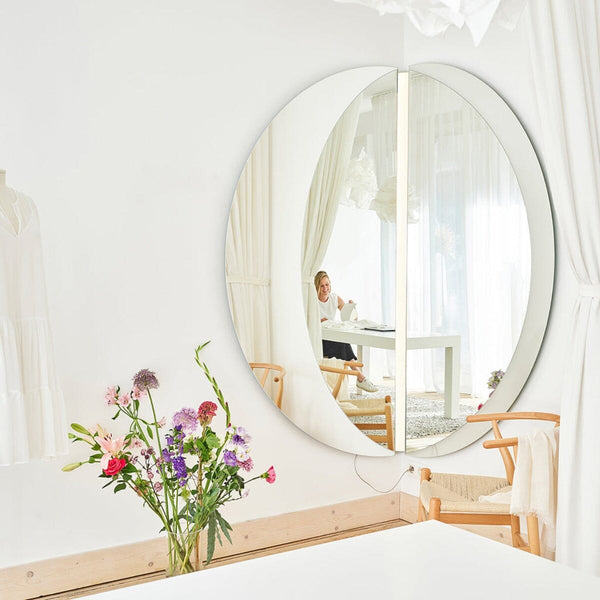
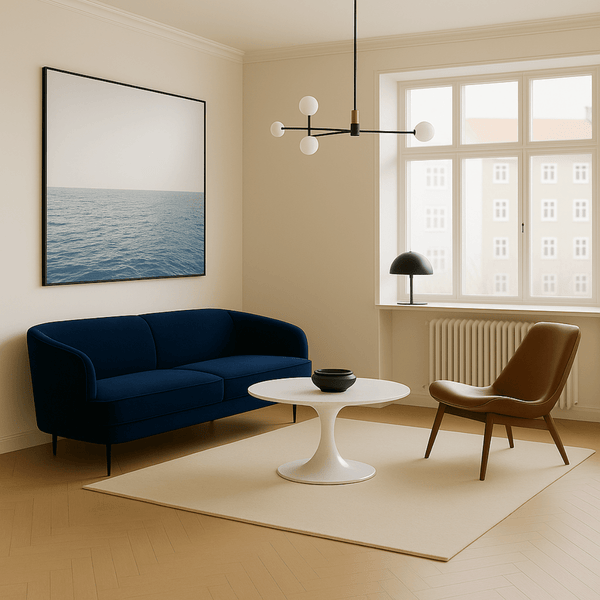
Some rooms demand more than a mirror — they demand a moment. Elysium Home's XL mirror collection presents the most commanding pieces from Deknudt's Belgian atelier: oversized, floor-to-ceiling statement mirrors that reshape a room's proportions, amplify light, and announce an interior's ambition. When scale is the intention, these are the pieces that deliver.
What Counts as an XL Mirror?
There is no universal definition of an XL mirror, but in the context of interior design practice, a mirror earning the designation is typically one that exceeds 120cm in its primary dimension — whether height, width, or diameter — and is intended to create spatial impact rather than simply serve a functional purpose. At Elysium Home, our XL mirrors range from generous portrait formats that approach ceiling height to wide landscape pieces that span entire walls. These are pieces that change a room's perceived scale. They double the depth of a space, multiply light sources, and give even modestly proportioned rooms the sense of expanse typically reserved for much larger homes. Deknudt's XL mirrors carry this responsibility with the quality their Belgian heritage demands: copper-free glass of exceptional clarity, frames finished with atelier-level precision, and proportions that have been considered in relation to real living spaces.
Room Impact Guide
Living Rooms
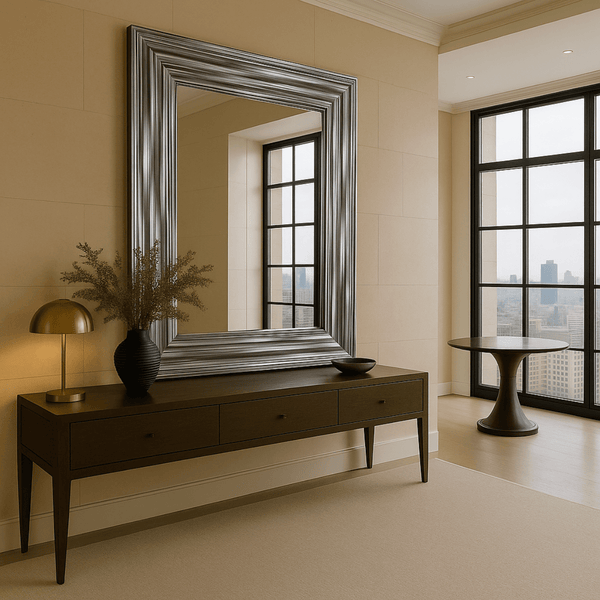
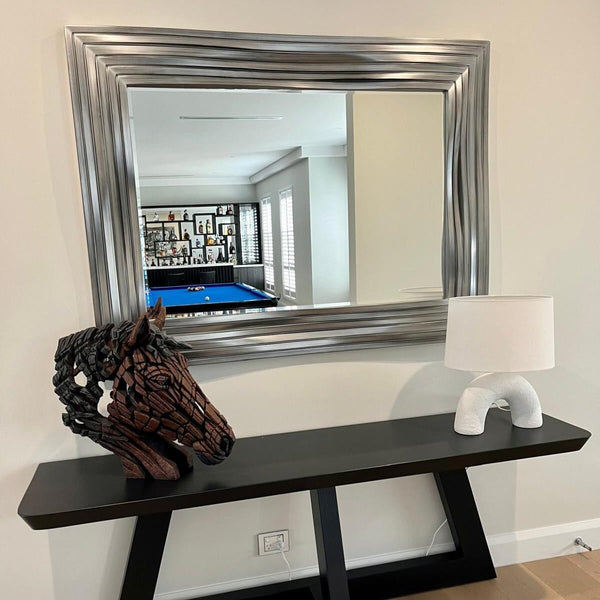
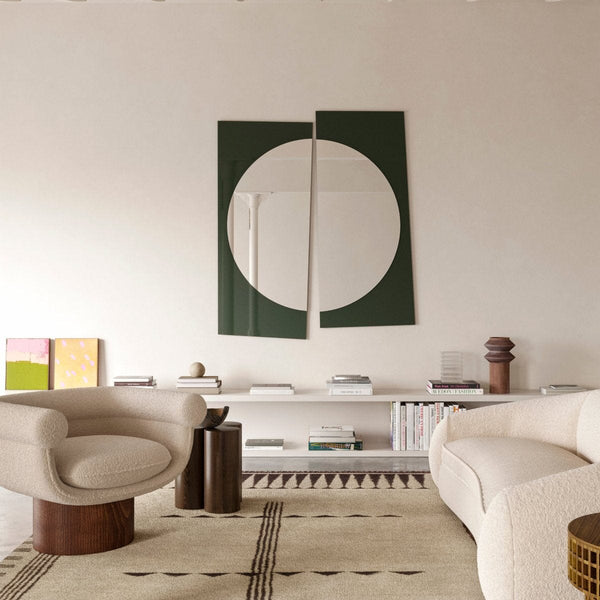
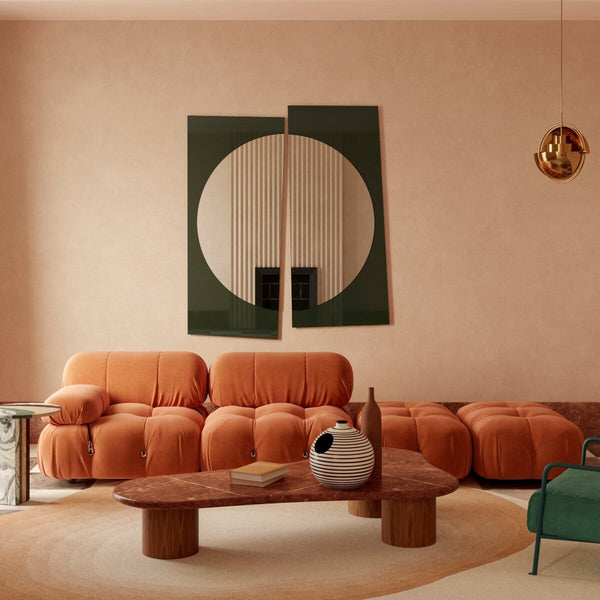
A large-format mirror in a living room is one of the most transformative design interventions available. Placed on the wall opposite a window, an XL mirror effectively doubles the natural light in the room and creates the illusion of a second window — a technique employed by interior designers in apartments and homes across the world. Above a fireplace, a wide XL landscape mirror anchors the room's social focal point and provides a backdrop for decorative objects on the mantel. For rooms with genuine ceiling height — 3m and above — a floor-to-ceiling portrait mirror can serve as a full architectural feature wall moment. Browse our complete designer mirror collection to compare XL options across shapes.
Hallways & Entryways
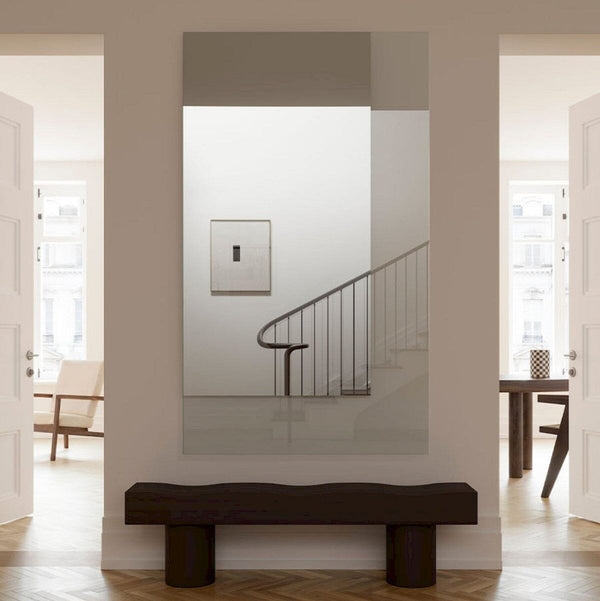
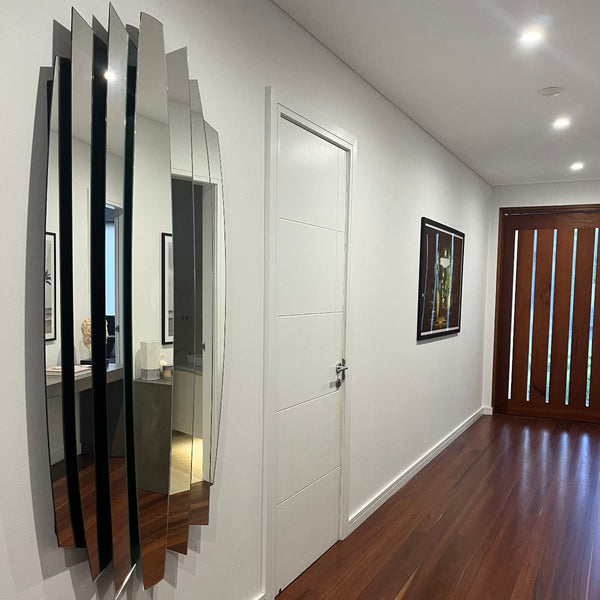
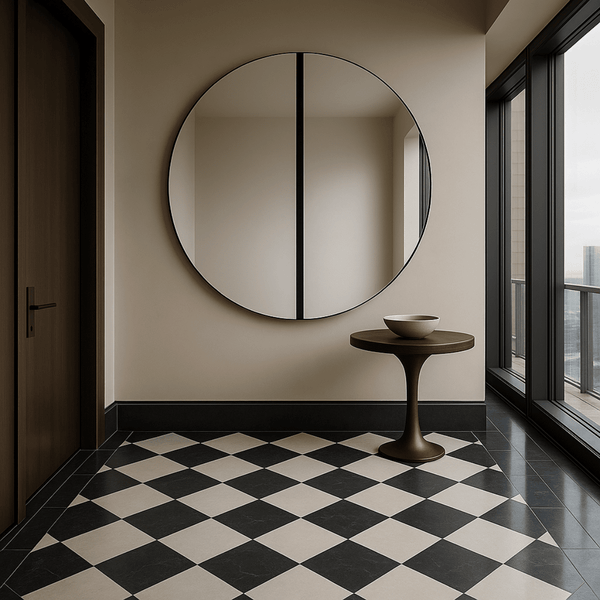
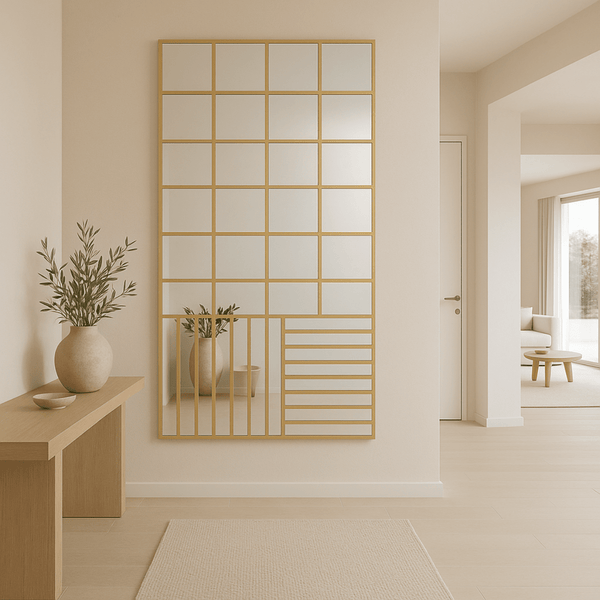
An oversized mirror in a hallway or entry is the most reliable method for making a narrow or dark space feel generous and welcoming. A full-height portrait mirror — leaned against the end wall or hung floor-to-ceiling — turns what might be a forgotten corridor into a destination. The key is to choose a frame that suits the architecture: a slender brass frame for a contemporary home, a deeper ornate finish for a period property. See also our round mirrors for oversized circular options that work particularly well in larger entry halls.
Dining Rooms
In a dining room, an XL mirror creates a sense of abundance. Placed on the wall behind the dining table — especially opposite a window — it makes the room feel twice its size and adds an elegant visual depth to candlelit evenings. A wide landscape XL mirror works beautifully in this context, positioned at a height that reflects both the table setting below and the light sources above. For rectangular dining rooms with narrow walls, a portrait XL mirror at the end of the space creates a trompe l'œil corridor effect that adds visual length.
Lean vs Hang: How to Install a Large Mirror
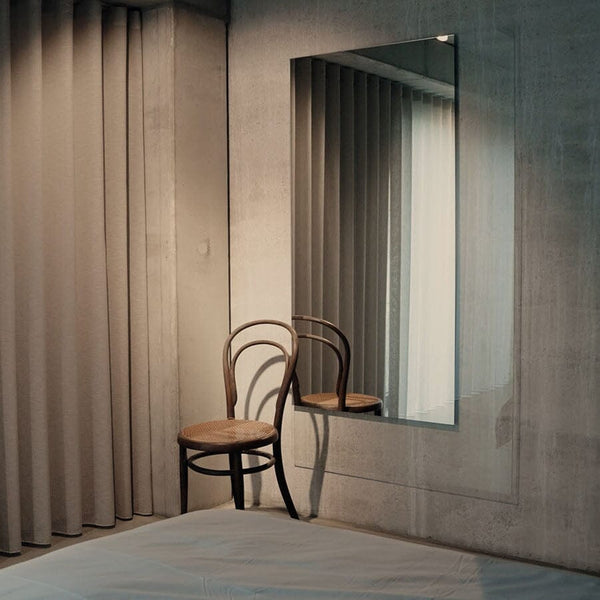
Large mirrors present an installation choice that smaller pieces do not: lean or hang. Both are valid, and both have distinct aesthetic implications. A leaned mirror — resting against a wall at a slight angle — is casual, confident, and very much of the moment in contemporary interior design. It suggests permanence through sheer weight rather than fixings, and has a relaxed luxury that a hung mirror cannot quite replicate. It also allows the mirror to be repositioned easily if the room changes. A hung XL mirror, by contrast, is more formally committed — it makes a definitive statement about placement and works better in rooms where the mirror is intended to be a permanent architectural feature. For leaning large mirrors safely, ensure the base is on a non-slip surface and the mirror rests at an angle against a solid wall rather than a partition. For hanging, always fix into wall studs or use heavy-duty anchors rated well above the mirror's weight, and use at least two fixing points to prevent rotation.
How to Choose the Right Proportions
Choosing proportions for an XL mirror requires considering the room's dimensions, ceiling height, and the surrounding furniture. A mirror that is too wide for its wall will feel oppressive; one that is too narrow will look underdone. The most reliable method is to tape out the mirror's footprint on the wall before committing — use painter's tape to mark the exact dimensions and live with it for a day or two. This reveals whether the proportions feel right in the actual light and context of your room. For rooms where the ceiling is 2.7m or below, a mirror that reaches above 200cm in height may feel overwhelming; for rooms with 3m-plus ceilings, a taller piece will feel in harmony with the space. Consult our team at the Lane Cove showroom — call 02 9879 6670 — for personalised advice on proportions for your room. Explore our dedicated rectangular mirrors collection for XL landscape and portrait options.
Why Choose Elysium Home for XL Mirrors
Sourcing an XL designer mirror requires confidence in both the piece and the supplier. Elysium Home is Australia's authorised stockist of Deknudt Mirrors, and our XL collection represents the full expression of what Belgian atelier mirror-making can achieve at scale. Copper-free glass ensures that even at large dimensions the mirror surface remains pristine and tarnish-free. Our team can assist with logistics, installation planning, and design decisions for large format pieces. Visit our Lane Cove, Sydney showroom or contact us online to discuss your project.
Frequently Asked Questions
What counts as an XL mirror?
In practical interior design terms, an XL mirror is typically any mirror whose primary dimension — height, width, or diameter — exceeds 120cm. At this scale, the mirror begins to function less as a decorative accent and more as an architectural feature: it changes the perceived size of a room, multiplies light, and becomes a centrepiece in its own right. Elysium Home's XL collection focuses on pieces that deliver genuine spatial impact, sourced from Deknudt's Belgian atelier where large-format production maintains the same copper-free glass quality as smaller pieces.
Should I lean or hang a large mirror?
Both approaches work well, and the choice depends on your interior style and the room's purpose. Leaning is ideal for bedrooms, living rooms, and spaces where you want a relaxed, confident aesthetic — it also allows for easy repositioning. Hanging is better for hallways, dining rooms, and spaces where the mirror is intended as a permanent fixture and needs to be securely positioned. For safety, leaned mirrors should rest against a solid wall on a non-slip base; hung mirrors of significant weight should be fixed into studs with appropriate hardware rated for the load.
How do I choose the right size large mirror for my room?
Start by measuring your wall space and marking the proposed mirror dimensions with painter's tape. Live with the taped outline for a day or two before committing — it will reveal whether the proportions feel right in your specific lighting conditions and alongside your furniture. As a general guide, in a living room the mirror should be in proportion to the sofa or furniture grouping it relates to; in a dining room it should relate to the table's length; in a hallway it should fill the visual field without touching ceiling or floor. Our team at Elysium Home can provide personalised sizing advice for your specific room.
Are large mirrors good for small rooms?
Counterintuitively, large mirrors are often better for small rooms than small mirrors. A mirror that is too small for a wall simply looks lost — it does nothing to change the room's perceived scale. A large mirror in a small room, positioned correctly, makes the space feel significantly bigger by doubling the visible depth and bouncing light across the room. The key is that the mirror must occupy a substantial portion of the wall it is on — at least half the wall's width — and ideally be positioned opposite a window or light source. In a small bathroom, bedroom, or living room, a well-chosen XL mirror can be genuinely transformative.